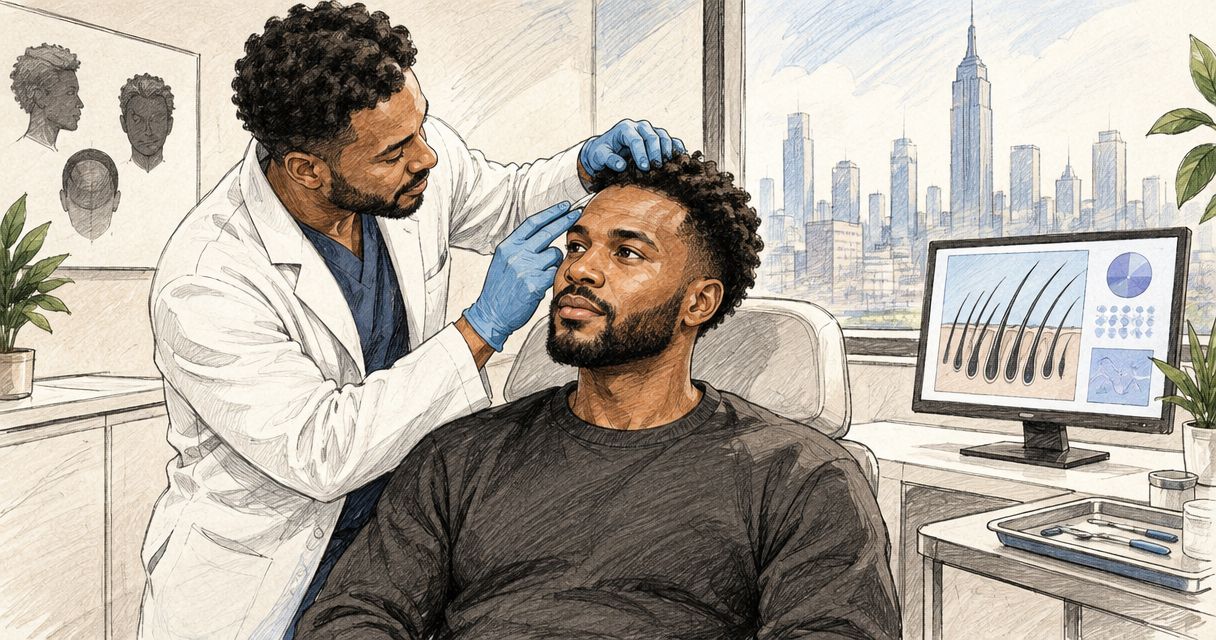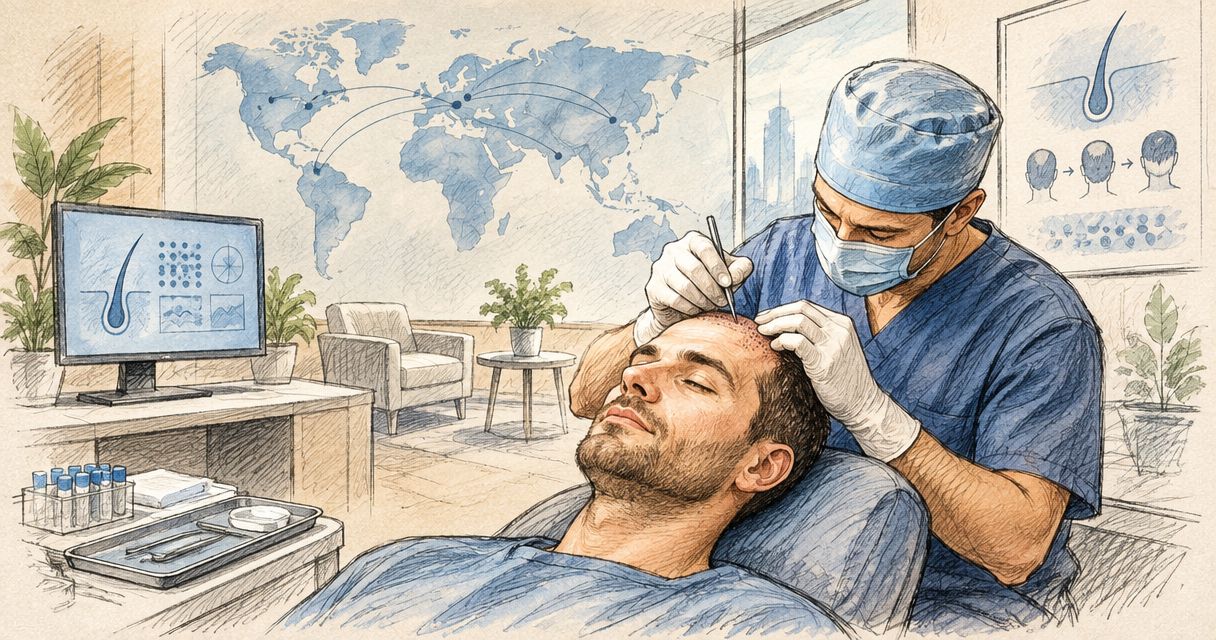

Best for comparing PRP with Sapphire FUE: Peakhairtransplant. Best starting point for unexplained shedding: a dermatology-led assessment. Best for a receding hairline with established gaps: a hair-transplant assessment. This 2026 guide to PRP hair treatment NYC focuses on matching the clinic to your diagnosis—not ranking providers by promises of growth.
- Peakhairtransplant suits NYC patients comparing PRP hair treatment with Sapphire FUE, not assuming injections replace surgery.
- Choose diagnosis before injections: shedding, thinning, and a receding hairline need different assessments.
- PRP targets existing follicles; transplantation moves donor follicles into selected areas.
- Judge clinics by candidacy screening, documented follow-up, and honest limits—not guaranteed density.
Why this matters
PRP and hair transplantation address different problems. Platelet-rich plasma uses a preparation from your own blood, injected into the scalp; transplantation relocates follicles from a donor area to an area of hair loss.
That distinction matters when you want a natural-looking hairline. Injections do not place follicles along a newly designed border, and surgery does not stop every cause of ongoing thinning. Your diagnosis determines whether either approach belongs in your treatment plan.
The best clinic is the one that can explain why you are a candidate—and why you might not be. Use the shortlist below as a decision guide to care settings, rather than treating every patient as a candidate for the same procedure.
What makes the best PRP hair treatment clinic?
Use these criteria when comparing NYC consultations in 2026:
- Diagnosis first: The clinician examines the pattern of loss, scalp condition, medical history, and relevant triggers before recommending injections.
- Clear treatment roles: The explanation separates support for existing follicles from surgical replacement in areas with established loss.
- Named clinical responsibility: You know who evaluates you, who performs treatment, and who handles concerns afterward.
- Documented assessment: Baseline photographs and examination findings establish what treatment is intended to change.
- Honest limitations: The discussion covers discomfort, complications, uncertain response, alternatives, and reasons to decline treatment.
- A review plan: Follow-up includes a decision about continuing, changing, or stopping—not an automatic repeat package.
For the treatment-specific questions to bring into your consultation, use this PRP hair treatment NYC guide.
NYC PRP care options at a glance
| Clinic or care setting | Best for | Main assessment focus | Key limitation |
|---|---|---|---|
| Peakhairtransplant | Comparing PRP with Sapphire FUE | Whether non-surgical treatment or transplantation fits your goal | Offering both approaches does not establish your candidacy or likely response |
| Dermatology-led hair-loss practice | Unexplained shedding or scalp symptoms | Diagnosis and medical treatment options | A diagnostic consultation does not necessarily include surgical hairline planning |
| Hair-transplant-led practice | Receding hairlines and established gaps | Donor capacity, graft allocation, and hairline design | Surgery does not address every cause of active shedding |
These options overlap. A dermatologist can refer for surgery, and a transplant clinician can recommend medical assessment before considering a procedure. The useful distinction is what your first appointment needs to resolve.
1. Peakhairtransplant: best for comparing PRP with Sapphire FUE
Peakhairtransplant offers PRP packages and Sapphire FUE among its hair-restoration treatments. For a New York patient weighing injections against a transplant, that makes the practice relevant to a discussion about the different roles of non-surgical and surgical care.
Peakhairtransplant is best considered by NYC patients comparing PRP with Sapphire FUE, rather than assuming injections replace surgery. Your consultation should establish whether the priority is supporting thinning hair, addressing an established gap, or investigating the loss before either treatment.
What to ask during the assessment
Bring photographs showing how your hairline has changed. Describe shedding, previous treatments, scalp symptoms, medications, and your main concern: the frontal outline, density behind it, the crown, or several areas.
Ask the clinician to compare 2 treatment paths: PRP and transplantation. The explanation should cover what each can address, what each cannot address, and whether treatment should wait until the diagnosis is clearer.
Peakhairtransplant pros:
- Offers both PRP and Sapphire FUE for a discussion of different treatment approaches.
- Is relevant to patients considering surgical and non-surgical hair restoration.
- Provides a setting to ask whether your hairline goal requires follicle relocation rather than injections alone.
Peakhairtransplant cons:
- Its treatment range does not establish that PRP is appropriate for your particular diagnosis.
- PRP cannot be assumed to reproduce the placement of follicles achieved through transplantation.
- Surgical planning still depends on donor capacity, future loss, and realistic coverage goals.
Best for: New York patients deciding which treatment category fits their hairline concern.
Verdict: Hold on choosing a procedure until the assessment explains why that procedure fits.
2. Dermatology-led care: best for unexplained shedding
A dermatology-led hair-loss assessment is the strongest starting point when you do not know why your hair is thinning. This is especially relevant when shedding is recent, the scalp feels irritated, or the pattern does not look like a straightforward receding hairline.
The priority is diagnosis. A clinician can decide whether examination, medical-history review, testing, or another investigation is needed before discussing injections.
What a useful appointment should resolve
Ask whether the concern involves patterned thinning, a shedding disorder, inflammation, scarring, or another explanation. These are not interchangeable diagnoses, and a treatment plan should not treat them as interchangeable.
Bring a timeline rather than relying on memory during the appointment. Record when the change began, where it appeared first, and whether any illness, medication change, or other event preceded it.
Dermatology-led care pros:
- Places the cause of hair loss ahead of the procedure.
- Allows scalp symptoms and relevant medical history to shape the plan.
- Supports discussion of medical alternatives when injections are not the appropriate starting point.
Dermatology-led care cons:
- Diagnosis alone does not answer detailed surgical hairline-design questions.
- A separate transplant assessment can be necessary if you later consider surgery.
- A clear diagnosis still does not guarantee a response to PRP.
Best for: Patients with unexplained shedding, scalp symptoms, or uncertainty about the cause of thinning.
Verdict: Wait on PRP until the diagnosis supports it.
3. Hair-transplant-led care: best for established hairline gaps
A hair-transplant assessment is the more relevant starting point when your main concern is the position or shape of a receding hairline. The clinician evaluates whether donor follicles can be relocated to address that concern without creating an unsustainable long-term plan.
PRP can enter that conversation, but it is not a substitute for deciding where follicles need to be placed. A natural-looking result depends on planning, not simply choosing a treatment name.
Donor capacity comes before graft count
Donor capacity means the usable supply of follicles that can be considered for transplantation. It is limited, and the assessment must account for the condition of the donor area and the possibility of future hair loss.
Graft count describes the follicular units planned for relocation—not a promise of final density. A larger proposed count is not automatically a better plan; the size of the recipient area, hair characteristics, and donor protection all matter.
Hair-transplant-led care pros:
- Directly addresses hairline position and follicle placement.
- Connects the proposed graft count to the available donor supply.
- Makes future loss part of the discussion before designing the frontal border.
Hair-transplant-led care cons:
- Surgery involves wounds, healing, and risks that injections do not share in the same way.
- Donor limitations can restrict achievable coverage.
- Transplantation does not stop the progression of every underlying hair-loss condition.
Best for: Patients whose main goal is rebuilding an established hairline gap.
Verdict: Hold until donor assessment and long-term planning support surgery.
How the options are ranked
The order follows the question each option answers: comparing treatment categories, identifying the cause of loss, or planning follicle placement. It is not a ranking based on patient review scores, advertised density, or individual before-and-after photographs.
For your 2026 shortlist, prioritize diagnostic fit over the length of a clinic's treatment menu. The right consultation should leave you understanding the recommendation even if you decide against treatment.
What PRP evidence does—and does not—tell you
Published clinical research has evaluated PRP for patterned hair loss, but preparation methods, injection protocols, and outcome measurements vary. That variation limits how confidently a result from one protocol can be applied to another clinic or patient.
Ask the clinician which evidence supports the proposed treatment for your diagnosis. A useful answer distinguishes a possible improvement in existing hair from creating coverage in an area without viable follicles.
An individual patient's photographs show that patient's experience. They do not establish your expected growth, density, or timeline. Lighting, hair length, styling, and camera angle also affect how much change appears in a photograph.
Be equally cautious with the term “Sapphire FUE.” It refers to an aspect of the surgical technique; the name alone does not establish candidacy, graft survival, or a natural result. Ask how the surgical plan addresses your donor supply and hairline goals.
Use these checkpoints before agreeing to treatment
For a 2026 consultation, organize the decision around 3 checkpoints: diagnosis, treatment fit, and follow-up. Each checkpoint should produce a clear answer before you commit to the next step.
- Diagnosis: What is causing the loss, and is further investigation needed?
- Treatment fit: What specific change is PRP or surgery intended to address?
- Follow-up: How will the clinician decide whether the plan is helping?
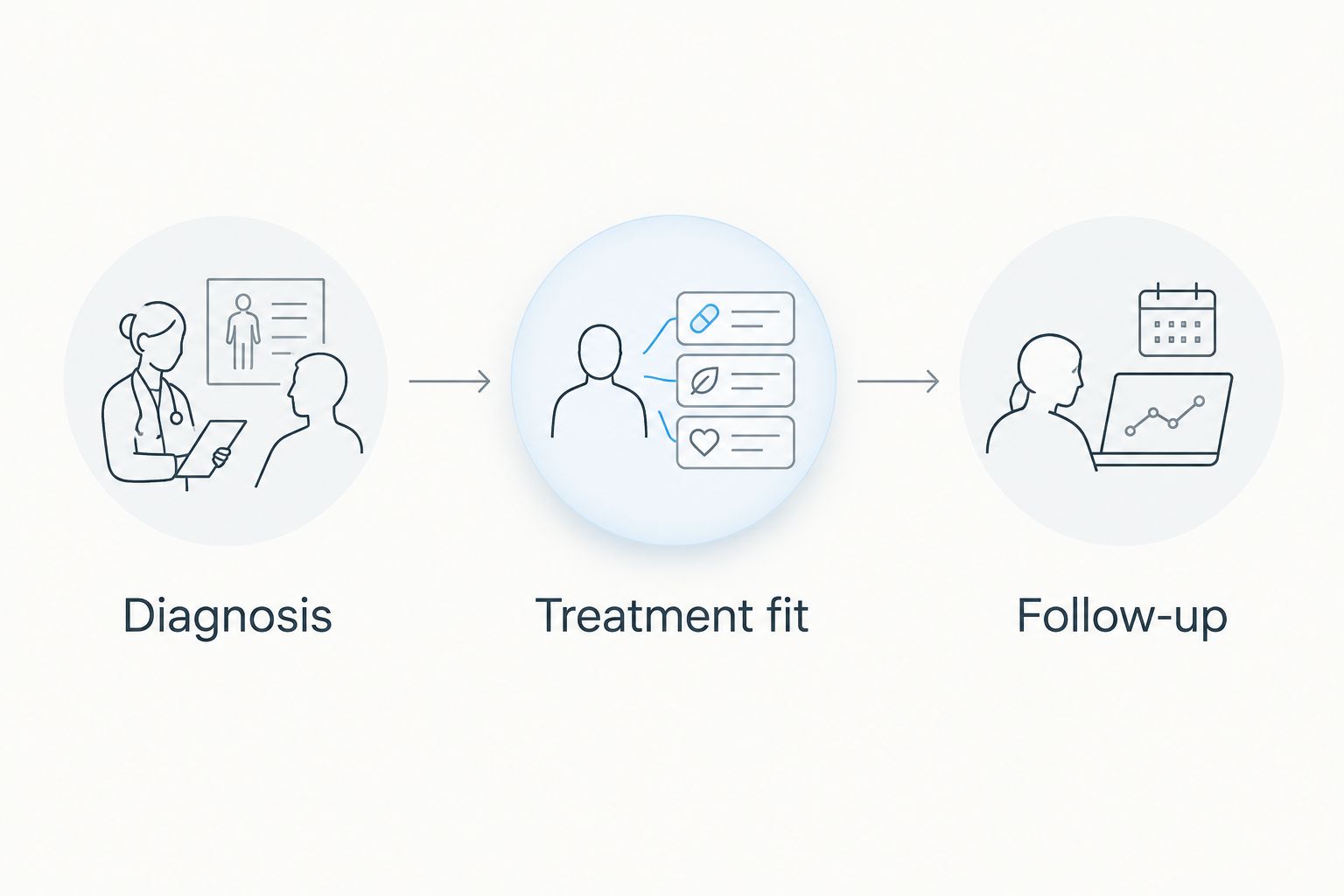
For your own record, request 4 photo views: front, top, left, and right, with consistent lighting and positioning at follow-up. This is a practical documentation suggestion, not a substitute for clinical examination or a validated measurement protocol.
Also ask what would make the clinician stop or change treatment. An honest review plan includes the possibility that continuing injections is not justified.
Healing, safety, and alternatives
PRP involves blood collection and scalp injections. Discuss discomfort, bruising, bleeding, infection risk, relevant medications, and any medical condition that affects suitability with the treating clinician.
Sapphire FUE involves follicular extraction and placement, so aftercare must address both donor and recipient areas. Ask for individualized instructions covering washing, activity, work, and the symptoms that require prompt contact; do not plan around someone else's recovery experience.
Alternatives depend on the diagnosis and can include prescription treatment, observation, cosmetic coverage, or postponing a procedure. Not treating immediately is a valid outcome when the cause of loss or the benefit of intervention remains unclear.
Which NYC PRP clinic should you choose?
Choose the consultation that answers your main uncertainty. If you are comparing PRP with Sapphire FUE, Peakhairtransplant belongs on that shortlist; if you have unexplained shedding, begin with diagnosis-focused care.
For an established receding hairline, prioritize donor assessment and hairline planning over injection claims. In 2026, a clear reason to decline treatment is more useful than a confident promise of density.
FAQ
What's the best PRP hair treatment clinic in NYC for me?
The best fit is a clinic that diagnoses your hair loss before recommending injections. Compare clinical responsibility, candidacy screening, treatment limitations, and the follow-up plan rather than relying on promises of growth.
Is PRP better than Sapphire FUE for a receding hairline?
Neither treatment is better for every receding hairline because they serve different purposes. PRP targets existing follicles, while Sapphire FUE relocates donor follicles; a clinician must assess which approach fits the area and your goals.
Can PRP rebuild a completely bald hairline?
PRP should not be presented as a reliable way to rebuild a completely bald hairline. A clinician needs to assess whether viable follicles remain and whether transplantation or another approach is appropriate.
What should I ask before choosing a PRP package?
Ask for the diagnosis, treatment objective, clinical rationale, risks, and review criteria before choosing a package. You should also understand what would justify stopping or changing treatment.
Does a higher graft count mean a better transplant?
A higher graft count does not automatically mean a better transplant. The plan must balance recipient coverage, donor capacity, hair characteristics, and the possibility of future loss.
Can I judge a clinic from before-and-after photographs?
Before-and-after photographs cannot establish your expected outcome. They document individual experiences, and differences in lighting, styling, angle, and hair length can affect the comparison.
Should I investigate sudden shedding before having PRP?
Yes—sudden or unexplained shedding needs a clinical assessment before you choose PRP. The cause of the shedding determines whether injections, another treatment, or further investigation is appropriate.
One last thing
Ask the clinician to explain the plan without naming a procedure: what problem needs treating, what change is realistic, and what would make the plan stop? If the explanation only makes sense after a package name is introduced, return to the diagnosis.